Showing posts with label Japanese culture. Show all posts

Thursday, August 14, 2014

Japanese Kakigori Summer


Summer in Japan is hot, but it's the humidity that makes the heat unbearable. People cool themselves off with fans or make their own shade by carrying parasols, however, for some real refreshment, everyone looks forward to a colder, tastier treat. Kakigori, or shaved ice, is a little bit of snow heaven amidst the relentless blazing sun. The store front will usually have a hanging sign that simply says "ice" in Japanese, and with recent scorching temperatures, it's like looking at a magical oasis.

TV shows and magazines rank kakigori shops during the summer, which makes everyone flock to the popular locations. Though the buzz adds to the long wait in line, it's worth it. The delicate fluffiness and delicious topping sauce are simply not to be missed. Flavors range from fruity to traditional tastes like green tea or soy bean (kinako). Unlike ice cream it doesn't fill up your stomach, so you might finish wanting seconds! Why don't they have this in New York?

Kinako kakigori
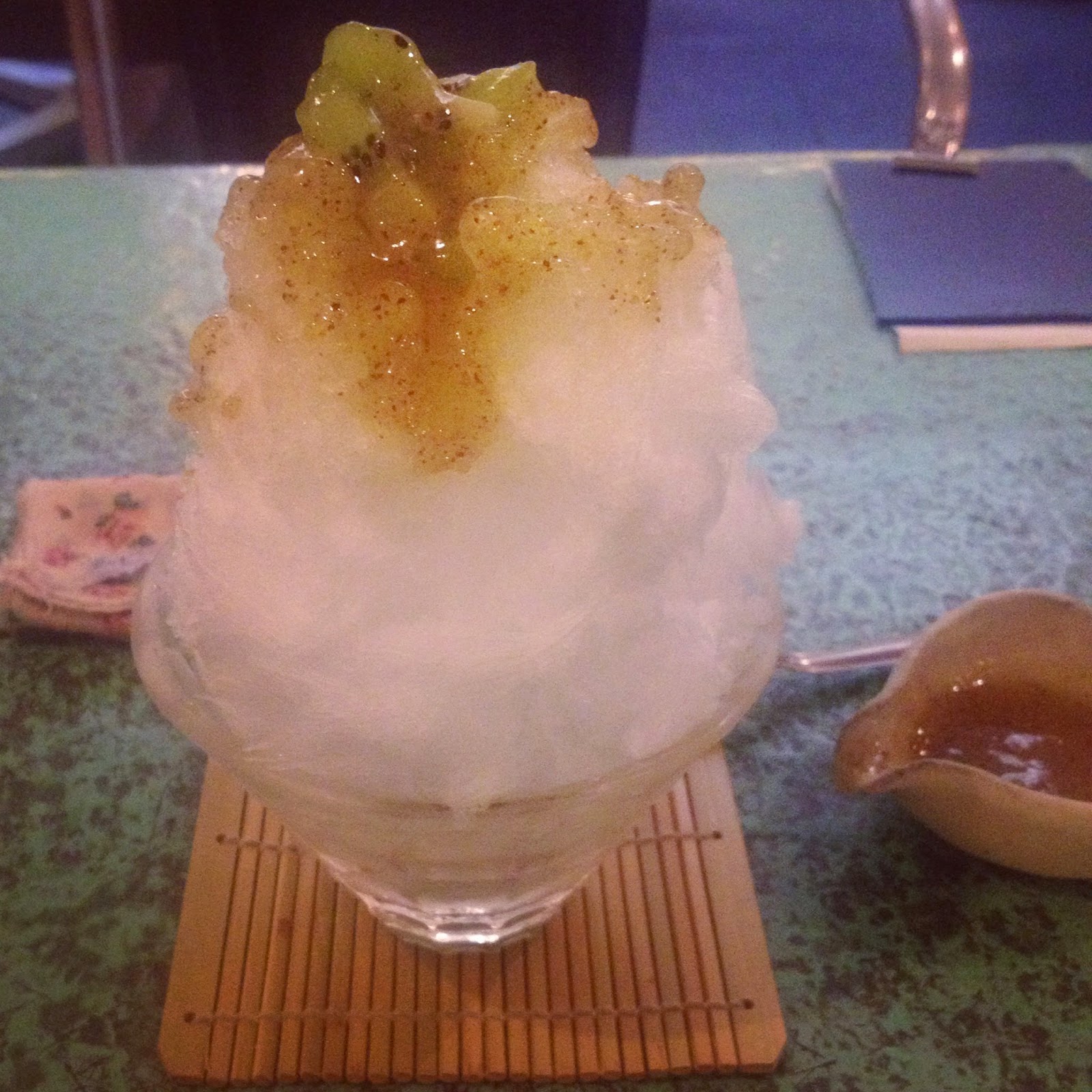
Kiwi kakigori

Kinmokusei (Fragrant olive) kakigori

Blueberry kakigori

Strawberry milk kakigori

Friday, February 7, 2014

Egoyomi: Japanese Picture Calendars

Here at Commune, we're ecstatic that our owner Aki is expecting a baby girl next month in March!
As her maternity leave begins next Sunday, we have been very busy accommodating her clients' appointments before she goes on her break. Her weekend schedule is often fully booked a week before with a number of requests to be on the waiting list. Despite the frenzy, we are looking forward to her due date and counting down the days.

Did you know during the Edo period in Japan, people referred to image based calendars to understand what month it was? These rather creative calendars were called Egoyomi ("picture-calendar") and designed for those who were illiterate with "hidden" element. During this period, each month was either 29 or 30 days and distinguished as "small months" (Sho no tsuki) or "large months" (Dai no tsuki). Every 2 or 3 years, a thirteenth month called Uru-zuki was included to incorporate leap year.


Can you believe that this late Edo Ee ja nai ka parade theme picture is actually a calendar? The "large months" are represented as men and "small months" as women with a child as the leap year month. The clothes also distinguished its respective month. Can you guess which one is January?


How about this one Momotaro-themed one? The character pertains to the Year of the Dog and again has the hidden element to represent the months. Can you identify where?


Tada! Here the large months (大 - dai) are concealed on his shoulder. Very clever.


Not all calendars however were so tricky. Take this one from 1840, the Year of the Rat. This one lays out each month with two rat characters as a story narrative for the year.

We can only imagine how real people used these calendars long ago in Japan, it would certainly be difficult to schedule appointments this way! Although these are absolutely fascinating, we prefer sticking to the good 'ol numerical calendars. See more of these Egoyomi calendars here!


Friday, October 25, 2013

Japanese Hair Monsters!


In the spirit of Halloween, we'd like to share some Japanese folk monster tales that we certainly wouldn't want to come across ourselves!

Futakuchi-onna (二口女)

Like the rokuro-kubi, the futa-kuchi-onna is a woman afflicted with a curse or supernatural disease that transforms her into a yōkai. On the back of her head beneath the hair, the woman's skull splits apart, forming lips, teeth, a tongue, until there is an entirely-functional second mouth in that spot. As if that weren't bad enough, the mouth begins the mumble spiteful and threatening things to itself, and demand food. If it is not fed, it will screech obscenely and cause the woman tremendous pain. Eventually the woman's hair begins to move like a pair of serpents, allowing the mouth to help itself to the woman's meals.

A futa-kuchi-onna is often considered to be a woman who lets her stepchild die of starvation while keeping her own offspring well fed; presumably the spirit of the neglected child lodges itself in its stepmother's body to take revenge. In one story the extra mouth is formed when one of these stingy women is accidentally hit in the head by her husband's axe while he is chopping wood, and the wound never heals.

Other times the futa-kuchi-onna is a woman who never eats, sought as a wife by a miser. While no food passes through her normal lips, the mouth in the back of her head consumes twice what the other one would.

Hari-Onago (針女)

Hailing from Ehime prefecture on Shikoku, this female ghoul has on her head a huge and terrible mass of mobile hair, each serpentine strand tipped with a sharp, barbed hook. She is fond of tormenting and preying upon young men. Appearing on roads as a beautiful woman, she laughs derisively at whoever strikes her fancy, and if he makes the mistake of laughing back, she lets down her deadly hair and gives chase.


Wednesday, October 9, 2013

Classic Japanese Actresses

What makes a hairstyle iconic? Here at Commune, we love reflecting back and being inspired by classic looks. Though we admire styles like Audrey Hepburn's fringe or Anna Karina's shoulder-length bob, we asked ourselves what Japanese actresses have influenced the hairstyles of their time.  After researching a few actresses from the 1950s and 1960s, however, we became more enamored by the actress herself. Here are a few profiles of iconic women in Japanese cinema.

 Kyoko Anzai


While her film career lasted under a decade, Kyoko Anzai's presence onscreen showed a young and high-spirited actress who clearly stood out despite not having many lead roles. Her most famous role in the sci-fi flick Battle in Outer Space (1959) was a huge leap from her debut as a fresh face in Seishun Jazz Musume (1953). Married to star actor Tatsuya Mihashi, Anzai passed away in 2002. 


Seishun Jazz Musume (1953)


Ruriko Asaoka

Emerging from the golden age of Nikkatsu Productions, Ruriko Asaoka was its most prominent actress. The cultural boom of the 1960's was a pivotal time for youth-oriented films and art house cinema. From film noir classics to jidaigeki dramas to contemporary pieces, Asaoka's range of performances and dynamic beauty propelled her into stardom. 

i hate but love 2.jpg
I Hate but Love (1962)
Red Handkerchief (1964)


Junko Fuji

When Junko Fuji wields a sword, it's unfathomable how she can combine strong fierocity with delicate grace. As one of the biggest stars of the yakuza film genre, Fuji's success as a notorious gambler earned her many reprisals of her role in the Red Peony series. Having starred opposite of big stars like Ken Takakura and Koji Tsuruta, Fuji clearly carried enigmatic charisma. At the young age of 26, she left the film industry to marry kabuki actor Onoe Kikugoro; but not after making name for herself and setting a standard for strong female lead roles. 


Setsuko Hara

Widely considered as Ozu's muse, Setsuko Hara's name is unanimous to the famous director's film work, but also stands on her own as one of the most recognizable Japanese actresses of her time. Her style and charming disposition displayed a great feminine beauty onscreen. After retiring from acting, Hara stepped out of the spotlight almost completely, leaving her smiling character an everlasting image in Japanese cinema.

Late Spring Criterion Collection Ozu
Late Spring (1949)

原節子2..jpg
Tokyo Story (1953)


Mariko Kaga

Mariko Kaga's career spans four decades in Japanese film and television, but her debut during the 1960's New Wave era made it evident that she was more than just a pretty face. Taking on bold characters in films like Masahiro Shinoda's Pale Flower (1964) and Ko Nakahira's Only on Mondays (1964), Kaga showed her depth as a mysterious femme fatale as well as a flirtatious call girl. Kaga's cute-sexy look has influenced many contemporary Japanese films today.

Pale Flower (1964)


Only on Mondays (1964)


Wednesday, July 17, 2013

Summer Festival Yukata Season

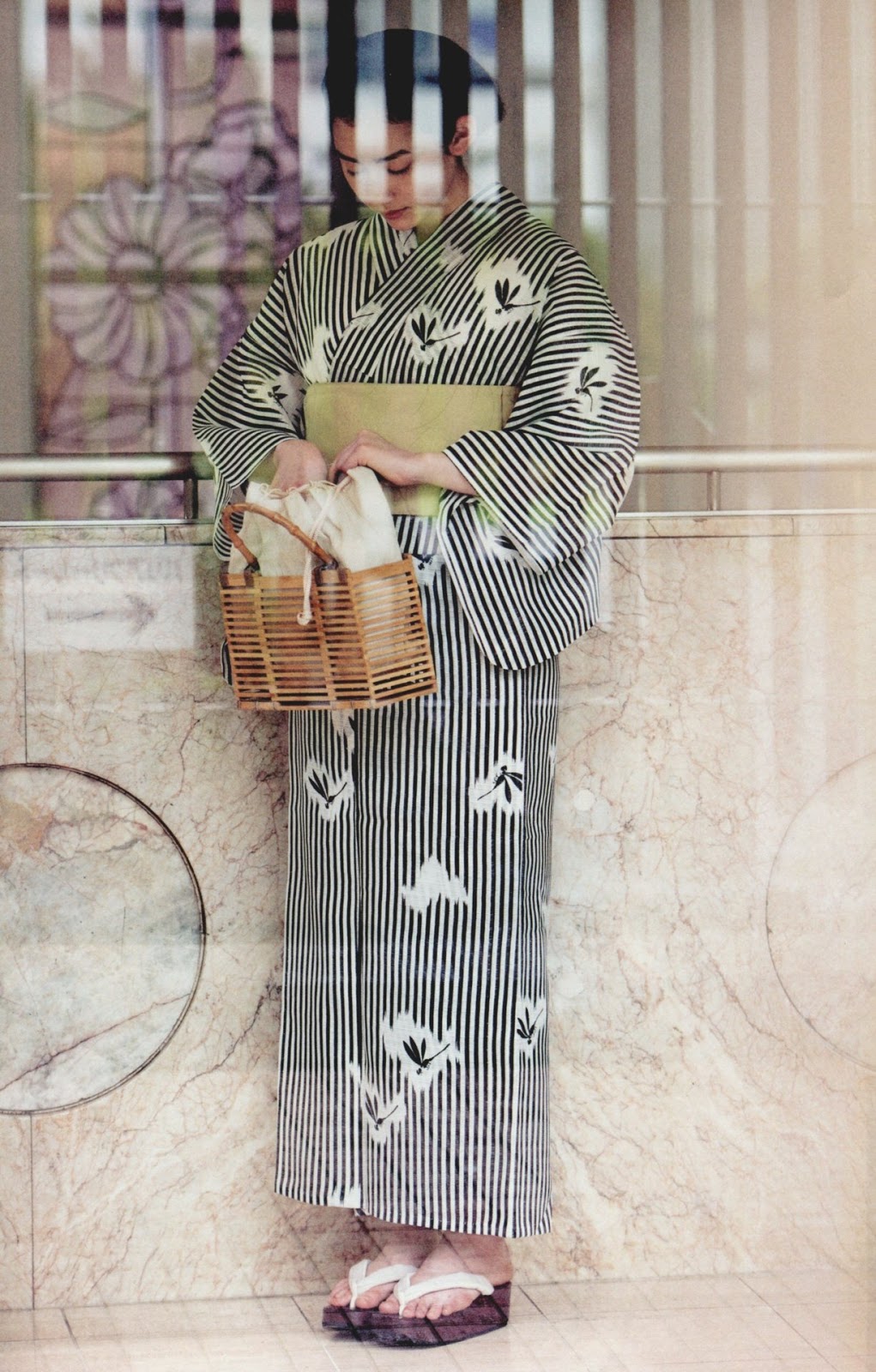
Summer festival season is well under way in Japan, with some of the major firework festival shows in Tokyo like Sumida River Fireworks and Tokyo Bay Fireworks coming up at the end of July and beginning of August, respectively. Although it's one of the hottest and most humid times of the year, going to a festival and dressing up in a summer yukata certainly makes up for it!

The yukata collar falls nicely behind the neck, making an up-do hairstyle an ideal way to show off the neckline and cool off from the summer heat. 
We love seeing a girl in a yukata and these styles make us wish we were in Japan!

Here's a list of summer festivals and firework shows for those planning to travel to Japan this year!


Wednesday, June 26, 2013

A Brief History of Western Salons in Japan

Look at those retro orange cushion dryers!
Hair says a lot about history. 

Coming across these old photos of Japanese hair styles makes you think about how western fashion was becoming an influence to Japanese women and how Japanese salons have adapted since.


The year is 1923. 

Japan is going through a cultural revolution as the Taisho Era (1912-1926) brings more influences from the West and push toward modernity. Chieko Yamano, a 27 year beautician who had come back from training in New York City, set up one of Japan's first western salons in the Maru building across from the iconic Tokyo station. With 20 assistants employed in western clothing, Yamano was among the many figures to help change the way Japanese women felt about hair.


Drastic setbacks like the Great Kanto earthquake and WWII made it more difficult for building new salons and many people didn't have the means to afford a new hair-do.


But Japan's rapid determination to recover during the post war period accelerated images of Western styles and soon new salon technologies made it possible for these styles to arise. Hair perms would become increasing popular.


Imagine walking into a salon and attaching this to your head!
Early Showa Era


1940's - 1950's Hair Styles

1960's Hair Styles
Sources: 
http://www.japantimes.co.jp/life/2012/07/29/general/the-taisho-era-when-modernity-ruled-japans-masses/

http://wiki.livedoor.jp/makitaro999/c/3375/ (Japanese)

Sunday, June 16, 2013

Nanbu Ironware from Hanamaki City, Iwate

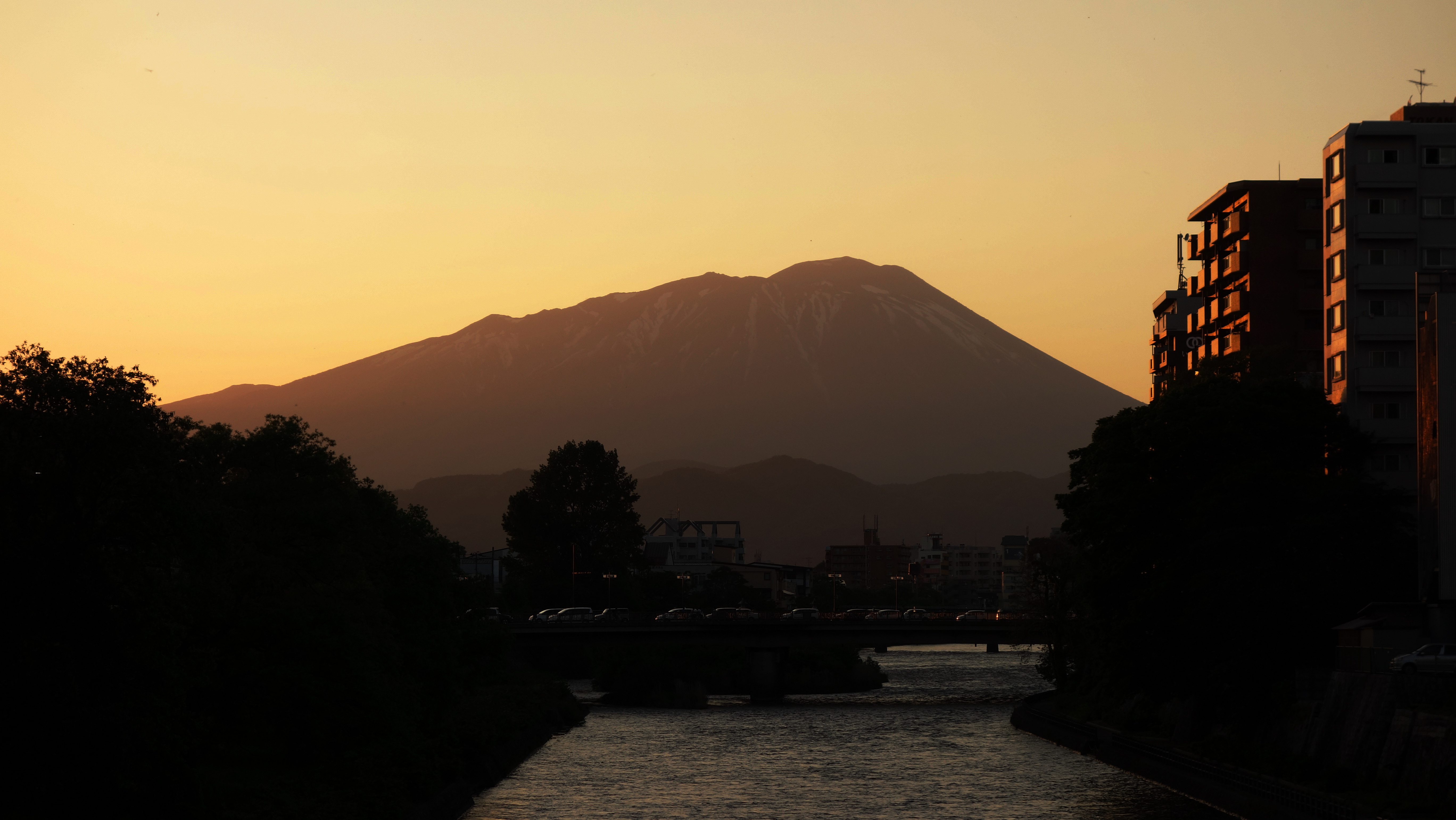
Mt. Iwate at Sunset

Iwate, Japan.

A coastal prefecture located northeast of Tokyo, Iwate is famous for its wanko soba, morioka reimen and dairy. But perhaps it is most known for being the birthplace of Nanbu Ironware ("Nanbu Tekki"), a long and celebrated tradition of iron casting craftmanship.

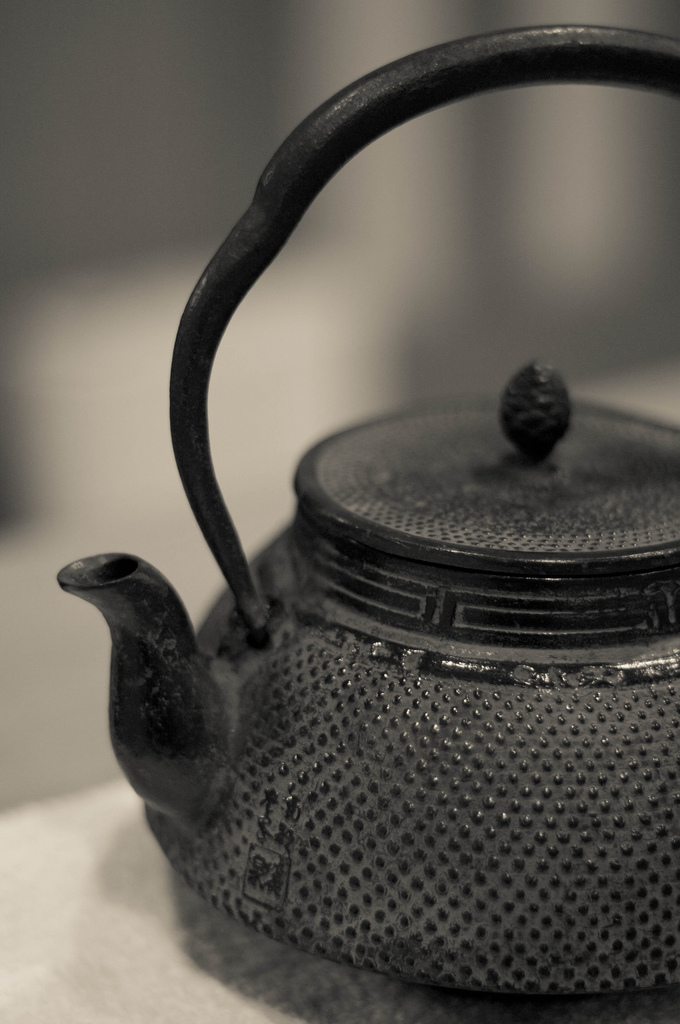
A region already famed for its rich iron mineral deposits and casting, Iwate became the top producer of ironware when artisans from Kyoto brought their method of their iron production in the late 17th century. Craftsmen began to minimize their huge cauldron pots to the produce the now world renowned Japanese iron tea pot.
Nanbu Tekki Tea Pot

400 years of passed down regional heritage, iron production has expanded to many impressive crafts like pans, ashtrays, wind chimes, paper weights, bottle openers, and iron coasters.


Our gift section is proud to introduce this traditional aesthetic from Hanamaki city in Iwate. These coasters are beautiful as well as simplistic in design. 
Iwate was one of the grief-striken regions of the 2011 tsunami earthquake.
We encourage you to learn about the history of Japanese craftware and hope you enjoy our other new additions from Japan.